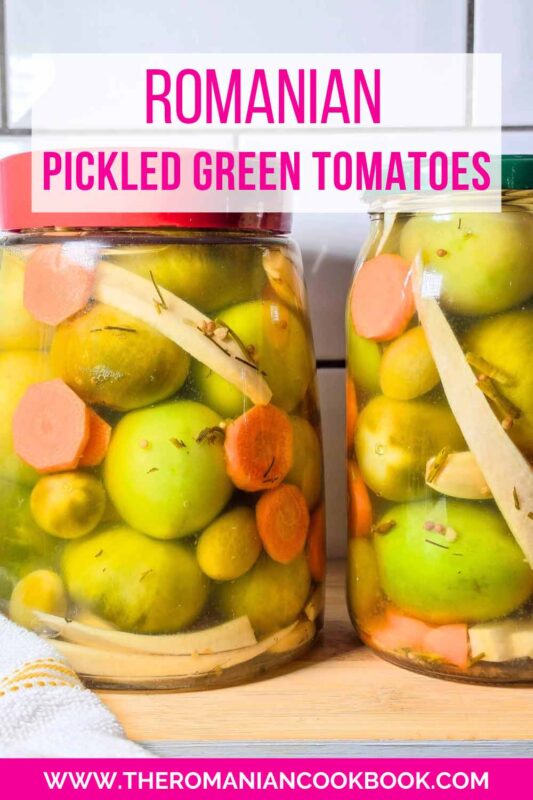
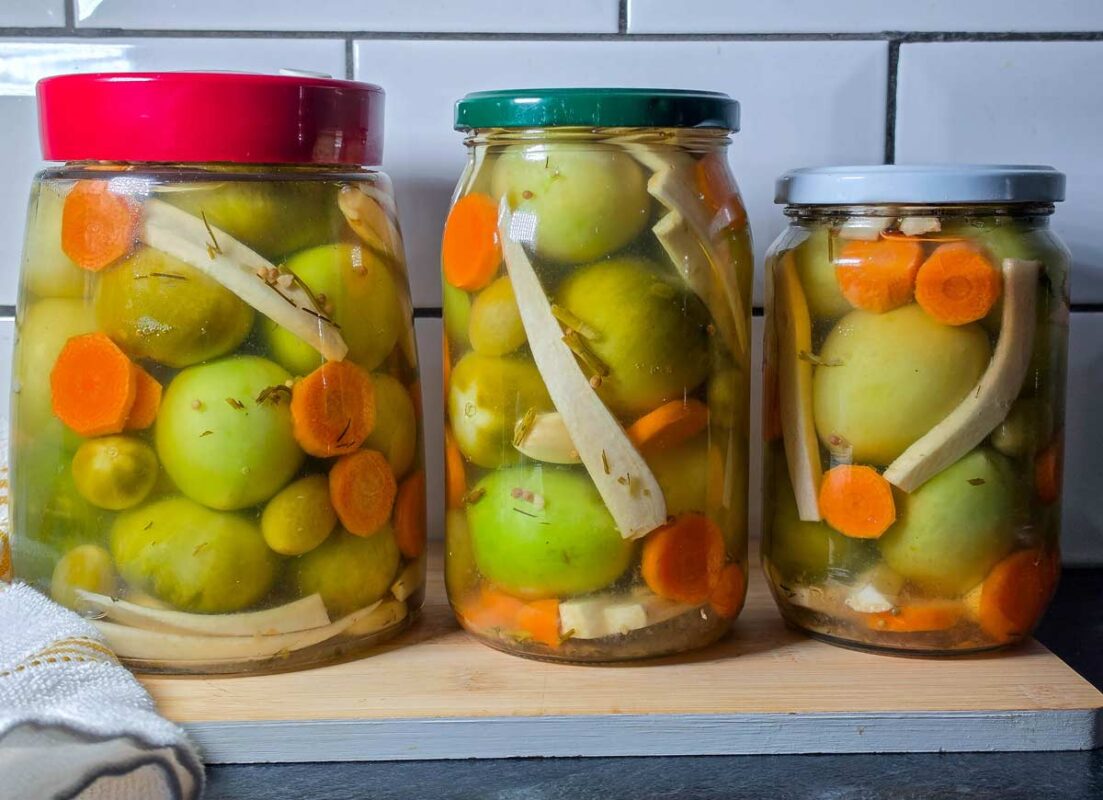
From all the Romanian pickles, gogonele are in my top three favourites. Romanian pickled green tomatoes are one of the best accompaniments to hearty winter dishes, alongside other traditional pickles. They have a firm, crisp texture, are juicy and tart, and are full of flavour.
However, not all gogonele are the same, and, just like with pickles, I am very, very picky. This is why I prefer to make my own at home. Most jars of pickled green tomatoes you find in shops contain vinegar and sugar, which completely change their taste. I prefer the traditional method of pickling them in brine, with plenty of horseradish, garlic and carrots in the jars. The horseradish helps keep the tomatoes firm and crunchy, while the garlic and pickling herbs give them that lovely, distinctive flavour. There is no need for vinegar or added sugar.
This year has been very generous with my garden tomatoes. Now that the weather started getting colder, I picked all the green tomatoes left on the plants because I knew they were unlikely to ripen outside. And with such a large harvest, I struggled had to find enough jars to pickle them all. Making gogonele murate is one of my favourite ways to use up the last tomatoes of the season and make sure nothing goes to waste.
The good news is that this Romanian pickled green tomatoes recipe is quite straightforward. You don’t need to sterilise the jars for this particular method, although they must be thoroughly washed and clean. You also don’t need to pour boiling-hot brine into the jars. Instead, you let the brine cool until it is warm before adding it to the tomatoes, making the process easier to manage.
Table of Contents
Ingredients for Romanian Pickled Green Tomatoes
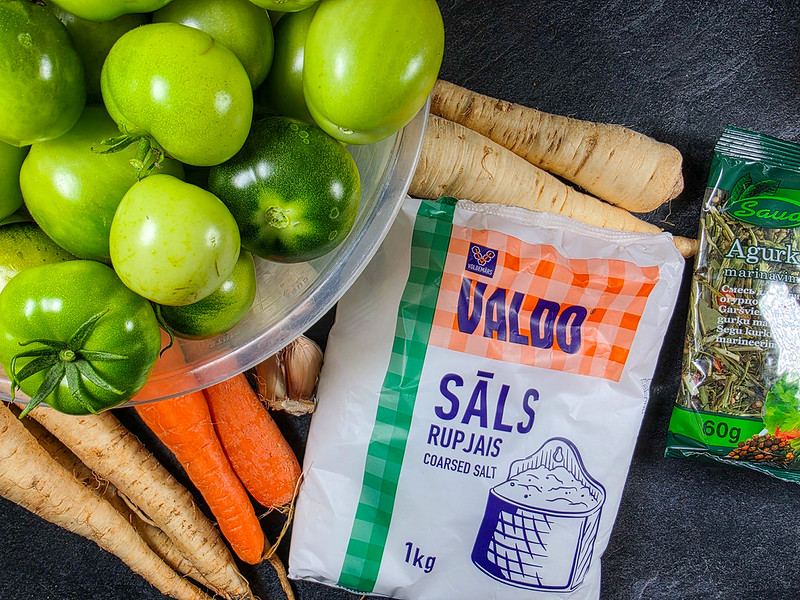
The main ingredient is, of course, green tomatoes. You will need around 1.5 kg for this recipe. If you have more or less, just adjust the quantities. Remember to use 25-30 gr of coarse salt per litre of water. Choose firm, unripe tomatoes without black spots, bruises, soft patches or damage caused by insects. Smaller tomatoes are particularly handy because they fit neatly into jars, but you can use a mixture of sizes. I grew five different types of tomatoes in my garden this summer, so I had plenty of different sizes and shapes.
For the brine, you will need 2 litres of water and 60 g of coarse salt without iodine. This works out at 30 g of salt per litre of water, which is the ratio I use for this recipe. Pickling salt is ideal if you can find it, but plain coarse, non-iodised salt is also suitable. Avoid relying on fine table salt, as it can measure differently by volume and may contain additives.
Horseradish root is another important ingredient. I use two roots, cut into pieces, and distribute them between the jars. Horseradish is traditionally used when pickling vegetables because it helps the tomatoes retain their firmness. It also adds a gentle, peppery flavour to the brine.
You will also need three carrots, plenty of garlic cloves, and optional, two parsley roots. Dried dill is very important but, if you can’t find any (which I know can happen abroad), get a pack of pickling herbs for any Eastern European show. I couldn’t find any at the shops this time, and I didn’t have any left in the garden, so I used a packet of pickling herbs and spices instead. Mine contained dried dill, mustard seeds, dried thyme, and some other herbs, and I followed the instructions on the packet, adding two tablespoons per litre of water. You can use dried dill and mustard seeds separately if you prefer.
How to Make Romanian Pickled Green Tomatoes

Start by preparing the brine. Measure 2 litres of water into a saucepan and add 60 g of coarse, non-iodised salt. Bring the water to a boil over a low heat, stirring until the salt has completely dissolved.
If you are using a packet of pickling herbs and spices, add the recommended amount to the water according to the packet instructions. For mine, this meant two tablespoons per litre of water. If you are using dried dill and mustard seeds separately, you can add them directly to the jars instead.
Once the salt has dissolved, turn off the heat and leave the brine to cool until it is warm rather than hot. You don’t want to pour boiling liquid into the jars.
While the brine cools, wash your jars and lids thoroughly with dish soap and clean water. Rinse them well and allow them to dry. Make sure the jars are suitable for food storage and free from cracks or chips.
Next, prepare the tomatoes. Wash them carefully under running water and dry them with a clean kitchen towel. Inspect each tomato as you go, removing any with black spots, insect damage, bruising or soft areas.

Peel the carrots and parsley roots, then cut them into sticks. Peel the horseradish and cut it into thick sticks. Peel the garlic cloves as well.
Now you can start filling the jars. Place a generous layer of dried dill at the bottom of each jar, if using it separately. Add some carrot slices, garlic cloves and pieces of horseradish. If you are using a pickling spice mix in the brine, you can still add some of the herbs and spices to the jars for extra flavour.
Arrange the green tomatoes inside the jars, packing them tightly without crushing them. Try to fill the gaps with smaller tomatoes, carrot slices and pieces of parsley root. The less empty space you leave, the easier it will be to fit everything neatly into the jars.
Once the jars are full, add more horseradish on top to hold the tomatoes so they don’t float to the top once the liquid is added.
Carefully pour the cooled, warm brine over the tomatoes until they are completely covered and the liquid reaches the top of the jar. Make sure the salt has dissolved fully and that the tomatoes are submerged.
Place the jars in a tray to catch any liquid that might overflow during the first day. Cover the openings with small, clean plates rather than sealing the lids tightly straight away. Leave the jars overnight at room temperature.
The following day, check the jars and top them up with more brine if needed. The tomatoes should remain completely covered by the liquid. Once you have checked the level, close the jars with their lids.
Store the jars in a suitable place for fermentation, usually your dark pantry. The tomatoes will generally need around a month to develop their flavour, although the exact timing depends on the temperature and the size of the tomatoes.
Once they are ready, you can serve them alongside your favourite Romanian winter dishes.
Notes and Tips:

- It’s important for the salt to be coarse and without iodine. The salt-to-water ratio matters, so weigh it rather than estimating the amount. For this recipe, use 30 g of salt per litre of water. You can use more or less, but never less than 20gr/litre.
- The tomatoes must not have any black posts or bug damage.
- You need horseradish root because it will prevent the tomatoes from becoming soggy whilst pickling. It has to be fresh, and not from a jar.
- Stir the brine while heating it and check that no salt remains at the bottom of the pot, as this can spoil the brine in the pickling process.
- Using dried dill is the best but unfortunately I couldn’t find any at the shops so I got a pack of pickling herbs and spices which contained the mustard seeds and the dill.
Romanian Pickled Green Tomatoes – Gogonele
Ingredients
- 1.5 kg firm green tomatoes
- 2 litres water
- 60 gr coarse salt non-iodised salt
- 3 carrots
- 2 horseradish
- 2 parsley roots
- garlic cloves
- dried dill
- mustard seeds
Instructions
- Measure the water and coarse salt, using 30 g of salt per litre of water.
- Place the water and salt in a saucepan. Bring to a boil over a low heat, stirring until the salt has completely dissolved.
- If using a packet of pickling herbs and spices, add them according to the packet instructions. For the mix used in this recipe, the recommended amount was 2 tablespoons per litre of water.
- Turn off the heat and leave the brine to cool until warm rather than hot.
- Wash the jars and lids thoroughly with dish soap and clean water. Rinse well and allow them to dry.
- Wash the green tomatoes and dry them with a clean kitchen towel. Discard any tomatoes with black spots, bruises, soft patches or insect damage.
- Peel the carrots, parsley roots and horseradish. Cut the carrots into slices and the parsley roots and horseradish into sticks or smaller pieces. Peel the garlic cloves.
- Place a layer of dried dill, carrot slices, garlic and horseradish at the bottom of each jar. Add mustard seeds and any additional pickling spices, if using.
- Pack the green tomatoes tightly into the jars without crushing them. Fill the gaps with smaller tomatoes, carrot slices and pieces of parsley root.
- Add more horseradish to the top of each jar.
- Pour the warm brine over the tomatoes until they are completely submerged.
- Place the jars in a tray to catch any overflowing liquid. Cover the openings with small, clean plates and leave overnight at room temperature.
- The following day, check the brine level and top up if necessary, ensuring all the tomatoes remain submerged.
- Close the jars and continue fermentation and storage according to a reliable, tested pickling method appropriate for your conditions.
- Allow around one month for the tomatoes to develop their characteristic sour flavour. Check for signs of spoilage before serving.
FAQ:
Why do my pickled green tomatoes become soft?
Soft tomatoes can result from using damaged or overripe fruit, insufficient salt, unsuitable fermentation conditions or poor-quality ingredients. Horseradish is traditionally added to help maintain firmness, but it cannot compensate for tomatoes that are already damaged or an unsuitable brine.
How long does it take for gogonele to pickle?
Allow around one month for the tomatoes to develop their flavour. The exact time depends on the room temperature, the size of the tomatoes and the fermentation conditions. They should taste pleasantly sour and have the texture you expect from a properly fermented pickle before serving.
Do I need to sterilise the jars?
For this recipe, I wash the jars and lids thoroughly with dish soap, rinse them well and let them dry. However, clean jars alone do not guarantee that a fermented pickle is safe. Use sound, food-safe jars and follow a tested fermentation and storage method, especially if you plan to keep the tomatoes for several months.
How should I store Romanian pickled green tomatoes?
During fermentation, keep the jars in the conditions recommended by your chosen tested recipe and make sure the tomatoes remain submerged in the brine. Once fermentation is complete, refrigerate them or store them according to a validated preservation method. Do not assume that simply closing the jars and putting them in a pantry makes them shelf-stable.
What can I serve with gogonele murate?
They are delicious alongside Romanian pork stew, roast meats, sausages, sarmale or other hearty winter dishes. Their tart flavour balances rich and fatty foods beautifully. I also like serving them as part of a traditional Romanian pickle platter with other pickled vegetables.
For more Romanian pickles recipes, check out my recommendations below:
Like it? Pin it!