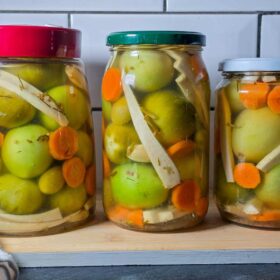
Romanian Pickled Green Tomatoes - Gogonele
Traditional Romanian pickled green tomatoes which are crisp, juicy and tangy, the perfect accompaniment to hearty winter meals.
Ingredients
- 1.5 kg firm green tomatoes
- 2 litres water
- 60 gr coarse salt non-iodised salt
- 3 carrots
- 2 horseradish
- 2 parsley roots
- garlic cloves
- dried dill
- mustard seeds
Instructions
- Measure the water and coarse salt, using 30 g of salt per litre of water.
- Place the water and salt in a saucepan. Bring to a boil over a low heat, stirring until the salt has completely dissolved.
- If using a packet of pickling herbs and spices, add them according to the packet instructions. For the mix used in this recipe, the recommended amount was 2 tablespoons per litre of water.
- Turn off the heat and leave the brine to cool until warm rather than hot.
- Wash the jars and lids thoroughly with dish soap and clean water. Rinse well and allow them to dry.
- Wash the green tomatoes and dry them with a clean kitchen towel. Discard any tomatoes with black spots, bruises, soft patches or insect damage.
- Peel the carrots, parsley roots and horseradish. Cut the carrots into slices and the parsley roots and horseradish into sticks or smaller pieces. Peel the garlic cloves.
- Place a layer of dried dill, carrot slices, garlic and horseradish at the bottom of each jar. Add mustard seeds and any additional pickling spices, if using.
- Pack the green tomatoes tightly into the jars without crushing them. Fill the gaps with smaller tomatoes, carrot slices and pieces of parsley root.
- Add more horseradish to the top of each jar.
- Pour the warm brine over the tomatoes until they are completely submerged.
- Place the jars in a tray to catch any overflowing liquid. Cover the openings with small, clean plates and leave overnight at room temperature.
- The following day, check the brine level and top up if necessary, ensuring all the tomatoes remain submerged.
- Close the jars and continue fermentation and storage according to a reliable, tested pickling method appropriate for your conditions.
- Allow around one month for the tomatoes to develop their characteristic sour flavour. Check for signs of spoilage before serving.