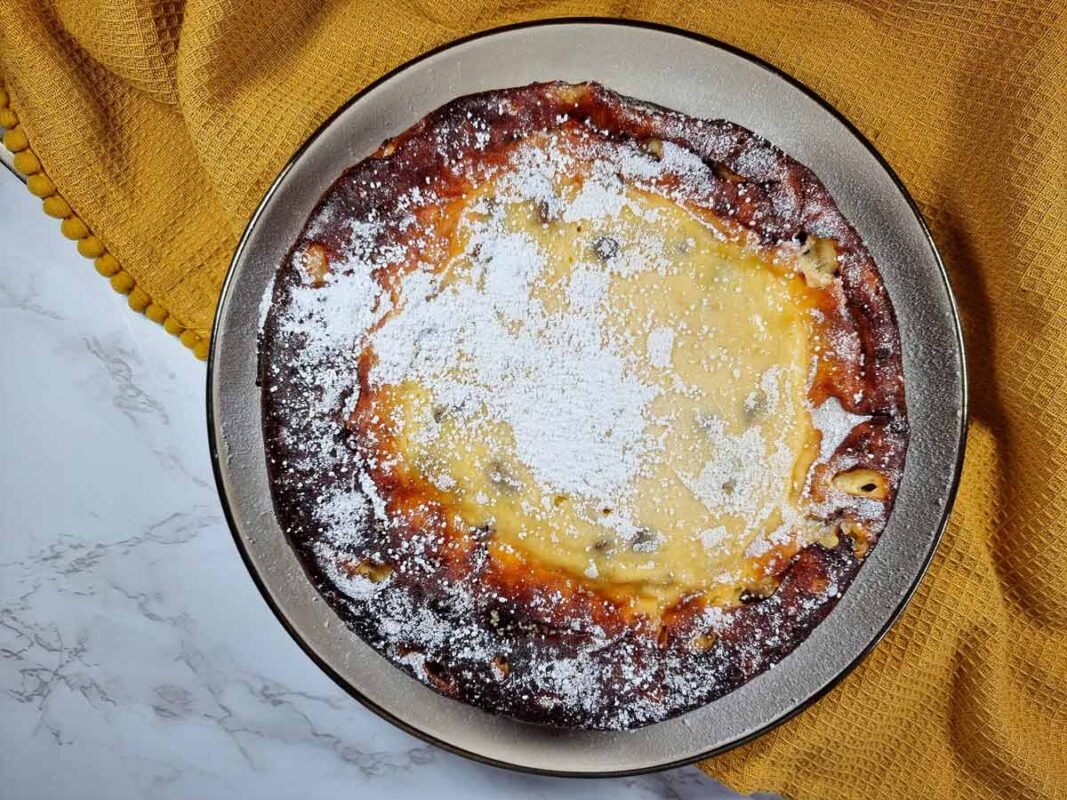
I was introduced to the Easter Pasca quite late in life, when I was already a teen. We always had plenty of dishes on the Easter dinner table, so my mom never cooked this extra dessert, which requires a lot of time. Until one year, when she made the traditional version of this Romanian Pasca recipe. Since then, it has never failed to be a part of our Easter. The recipe however was modified over time, to become lighter and easier to make. In this article I will tell you how to make the easy recipe of Pasca, which is as delicious as the original but takes a fraction of the time to make. The only difference is that my mom’s recipe doesn’t have the dough surrounding it.
As the Romanian Easter dinner is usually very heavy, it’s common for people to adapt the dishes. The dough around the pasca is the same one as the cozonac is made with. And there is always cozonac served at the end of the meal, so there is no point really to have it twice.
In my family, we would start eating at around 1PM on Easter day, starting with a large selection of appetisers. Then, my mom would serve the lamb soup, followed by the oven baked lamb steak. Then, the meal would end at around 6PM, with pasca, cozonac, and a selection of small cakes.
The Origins of Pasca
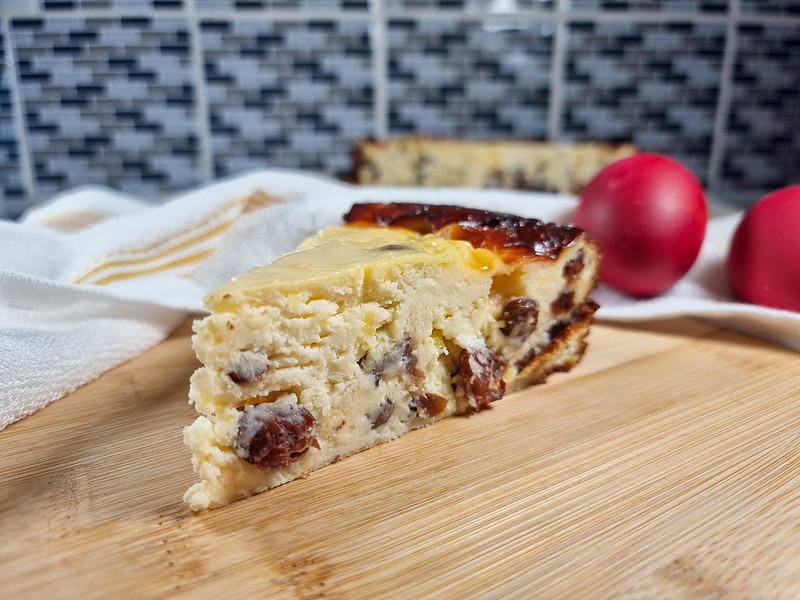
As most things related to Easter in Romania, Pasca has its origins in religion. Romania is a religious country where traditions are still very well kept, especially in the countryside. Pasca is made on the day before Easter and it is taken to the church. They are then placed in baskets alongside the traditional red eggs so that, on the night of the Easter Vigil, the priest would bless them.
In villages, after the midnight mass observing the resurrection of Jesus, the pasca is given to the other participants, and it is often the first thing you eat to break Lent.
Traditional Pasca is made from the same dough as the cozonac, which is then filled with a sweet mixture of fresh cheese, eggs, honey, and sometimes raisins. The top is decorated with a cross made from the same dough.
Ingredients for This Romanian Pasca Recipe

As I mentioned before, this recipe of traditional pasca is very easy and fast because we will not make the dough. This is a popular recipe in modern families, where people don’t have the time to spend the entire day in the kitchen cooking for Easter. I personally find this version of pasca much tastier and so much lighter than the original. You could imagine it to be like a baked cheesecake.
The ingredients to make this pasca recipe are: fresh cottage cheese, butter, sugar, eggs, sour cream, vanilla essence, raisins and some flour to bind it all together. I only added 100 grams of sugar in my recipe, as I don’t like it overly sweet. If you have a sweet tooth, you can always add a bit more. Just taste the final composition before transferring it to the baking tray.
How to Make the Pasca

Making this version of the Romanian pasca is very easy. All you really have to do is mix all the ingredients well, put the composition into a baking tray and pop it in the oven for 40 minutes to bake. Make sure you are working in the ingredients thoroughly, so you don’t get any lumps. I will list the exact order I followed below, in the recipe card.
There are a few important steps that you have to follow beforehand though. You must not forget to take the ingredients out of the fridge a couple of hours before you start cooking. Also, if your cottage cheese has liquid in it, make sure to drain it overnight. You need a very dry cottage cheese to make this recipe, in order to obtain a creamy composition.
Notes and Tips:

- The cottage cheese is the most important ingredient in this pasca recipe. Make sure you are buying it from a Romanian or Turkish shop, as our cottage cheese is very different from the ones I find in the shops abroad. When you open the pack, the cottage cheese should be dry. If you can’t find it, you can buy the cottage cheese from the supermarket but make sure to drain it overnight. The English cottage cheese seems to be mixed with sour cream.
- I love raisins, so I always add more. If you don’t like them, you can leave them out.
- Make sure all the ingredients are at room temperature. The butter has to be very soft, otherwise you will struggle to incorporate it properly into the mix.
- It is normal for the pasca to brown more on the edges than in the middle.
- Because I used an easy release tin, I put it inside an old baking tray that I am not using anymore, just in case there is any spillage in the oven. The composition of the pasca is quite loose, which is fine in a normal baking tray, but it may spill if you are using an easy release cake pan.

Romanian Pasca Recipe
Ingredients
- 500 gr cottage cheese well drained
- 300 ml sour cream with high fat content
- 100 gr sugar
- 75 gr butter
- 4 eggs
- 50 gr flour
- 1 tbsp vanilla essence
- 100-150 gr raisins optional
- semolina
Instructions
- Make sure all the ingredients are at room temperature and the butter is very soft.
- Drain the cottage cheese overnight if necessary, using a cheesecloth over a bowl.
- Start by mixing the eggs with the sugar and vanilla essence until creamy.
- Add the cottage cheese and incorporate well.
- Add the butter and mix well.
- Incorporate the flour and then add the sour cream.
- Add the raisins and mix well.
- Preheat the oven at 180 degrees.
- Butter the baking tin well to avoid the pasca sticking to it, and dust with semolina. This will take the moisture out of the cake.
- Add the composition into the baking tray, and bake for 40 minutes or so.
- You can check if the pasca is ready by pushing a toothpick into the middle of it. If it comes out clean, it is ready.
- Let it cool down in the baking tray for a couple of hours, then take it out. Mine came out beautifully.
- Put it in the fridge, and serve it on Easter day decorated with powdered sugar on top.
FAQ:
How Can You Store the Romanian Pasca?
You can store the Romanian Pasca in the fridge, covered with aluminium foil.
How Long Does the Romanian Pasca Last?
The pasca keeps very well in the fridge for about a week. But I bet you won’t resist looking and not eating it for so long.
For more traditional recipes for Easter check out the following:
Like it? Pin it!